
Book Review: Provencal Interiors By Betty Lou Phillips
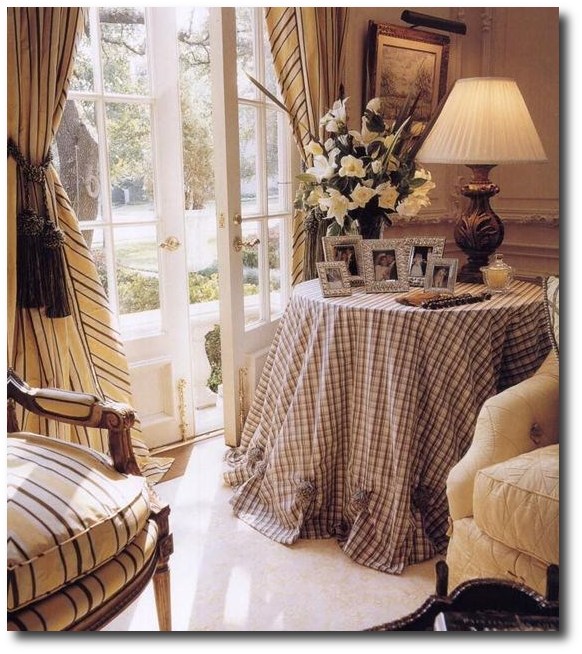
If you are thinking about redecorating one room, or refreshing your entire home, and are looking for a more of a french provencial feel, Provencal Interiors: French Country Style in America
New, this book cost close to $40 dollars, but you can get it from Amazon used from a staggering $1.50. With 18 reviews of this book, most site the book as very helpful for building ideas for their upcoming french provincial decorating projects.
While a few claim the book is far off base from genuine Provencal interiors, the pictures are stunning and quite inspiring. The negitive reviews come from overly critical obvious designers which claim that the genuine interiors of Provence are NOT made up of wealthy and purposefully decorated rooms.
What I find refreshing about this book is the author guides the reader to find their own style; being either being formal or country, she provides the overall building blocks to french style. For the vast majority of Americans, most are interested in the high end styles, than the peasant country interiors, this book applies to the majority of the public.
Phillips provides a range of inspiring pictures from both formal and informal. The book consists of 144 pages and even goes to the trouble of adding a lengthy 204 contact list of designers who specifically sell French furnishings in the USA.
A review from Paul Johnson says it has been helpful for him while he was in the process of building a French Chateaux house. The pictures in Phillips book allowed him to gain valuable insight for his decisions with colors, fabrics, moldings, furnishings, trim, cabinetry, and paint colors which he was able to present to his builder.
Provencal Interiors: French Country Style in America does give you great example of color schemes and architectural design which works together to create an overall great design. The contents of the book are broken up into 12 sections.
The first and section section reviews color choices, scale, texture, with many inviting and vivid photos. Section 3 talks about essentials in making a grand statement in a home. I particularly enjoyed her review of plaster walls on page 33 which can essentially transform a room all on its own. Brick, plasters faux finishes, old plank floors, glazed walls, and the charm of old craftsmanship can go a far way in designing a french inspired room. Section 5 – 8 reviews in depth the ideals of furnishings and textile choices, to bedroom and bathrooms.
Phillips tells us there is no right or wrong way to decorate when approaching the french style. Humble or grand, interiors are unpredictable and highly individual. The spaces photographed in her book have a strong sense of beauty, but all classify as well- designed. On page 44 Phillips suggests to buy the best you can afford, which I couldn’t agree with more.
Phillip states ” don’t forget about the well made, well-worn second hand reproductions that are superior to what you could purchase new, or vintage pieces that would look better painted”
Many of us, including myself cannot afford genuine french Provencal furniture, so I opt for the reproductions which are affordable in my price range. I collect them over time, and with the availability of paint and upholstery, it saves me thousands, and I can still attain the professional interiors featured in her book. Collecting over time makes it affordable, and allows you to switch out your furniture for better quality as they years go by.
She begins by saying that a well planned room that is prioritized is essential. If the plumbing and electrical are all in place, the furnishings, fabric and paint would be the prime considerations for a room. Often times if existing furniture will work in a room, a new mirror, rug, or collectibles could alter a rooms character. It is important that editing a few objects and focusing on the necessities that have special meaning can start the rebuilding process.
Color is one of the most powerful elements in design, and when used in the right way, it can raise ceilings, lengthen walls, draw your eye to architectural details, and hide flaws. Color can influence the atmosphere from a feeling of rest to refreshment. Not everyone feels confident when working with color, especially when there are such a wide variety of choices to select. Many people take rest in neutrals while wanting to venture into color, but just don’t know how to properly execute it.
Phillips suggests the first step to take is to identify the colors which are attractive to you or the client. This is relatively easy to begin with. Another starting point is to start around a favorite piece of furniture, such as a painted chest, or art work and work from the standpoint of picking complementary colors and additional furniture centered around one favorite focal point.
A general rule of thumb is to keep a color scheme to 3 colors and no more than 4 which unite the elements. It is not necessarily to stick to the same three colors through out the home, but if a complementary color can be determined which links one room to another, an overall flow can unite them together.
A color wheel has been every decorators best secret, as it is a tool that can combine different color combinations for the best impact. The color wheel is broken down into categories (monochromatic, analogous,triadic, and complementary) which can give a designer or homeowner an overall sense of direction.
Some tips from Betty Lou Phillips:
– Take advantage of what is already in your home such as baskets and greenery which most people own which has a french feel. Consider existing fabrics that suggest a European influence. Painting existing furniture can be a way of making a new statement.
– Arrange a similar mix of objects on a commode or dresser. Arrange an uneven mix of groupings, such as three plates on stands, a stack of three old wooden boxes together which make a bigger impact than 2 or 4. Consider grouping things together than staggering them around the room.
– Edit your belongings. Having too much clutter will only subtract from a well designed room.
– Improve a chest with some paint. The antique white, gray, green and soft aquamarine blue painted furniture.
– Consider fabrics as the second most essential ingredient to a French Provencal room next to having french furniture. Layering rooms with french fabrics, specifically florals, stripes, and checks which all work together. Gingham checks, and florals often balance each other out.
– While Americans tend to hide their clutter in the pantry, in France, wire baskets were used to store eggs, breads and utensils. Old heavy copper pots, bowls and tin molds are very common in french styled homes.
– Fine damask table cloths, and linen are draped over tables. Mixing patterns is common in french interiors. Over-sized wine glasses are not reserved for special occasions, but used even for table water.
-Seagrass, and jute throw rugs loosen up formal looking sitting rooms making them less stuffy and more inviting and comfortable. While some prefer bare wood floors, others like the ornate appeal of oriental rugs.
-Slipcovers can be one of the most useful ways to clean furniture especially with a growing family. They protect luxurious fabrics, but can also be an inexpensive way of improving a french chair bought second hand. Upholstery takes time and energy, and slipcovers can be a quick update instead of the expense of upholstering.
-When it comes to upholstery, nail heads can sharpen up a piece of furniture giving it more richness and elegance. French are quick to note that Americans often space their nail heads too far apart, throwing the most perfect chair’s proportions out of balance.
– Common french elements are framed family portraits, stunning flower arrangements,memory photos in frames, well read antique books, framed old maps, decorative throw pillows, reading lights, warm throws,alcohol decanters, tole lamps, tole trays, and transferware hung on the wall.
We hope that Provencial Interiors By Betty Lou Phillips will be as inspiring as it was for me.

My Gold & Navy Floral Dixie French Provincial Dresser Makeover
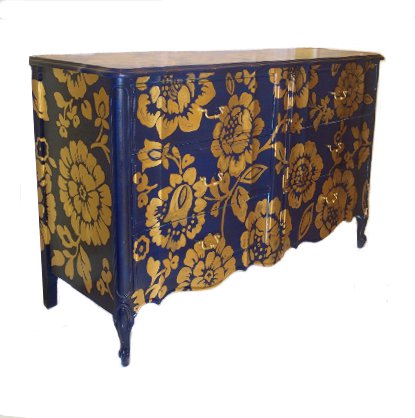
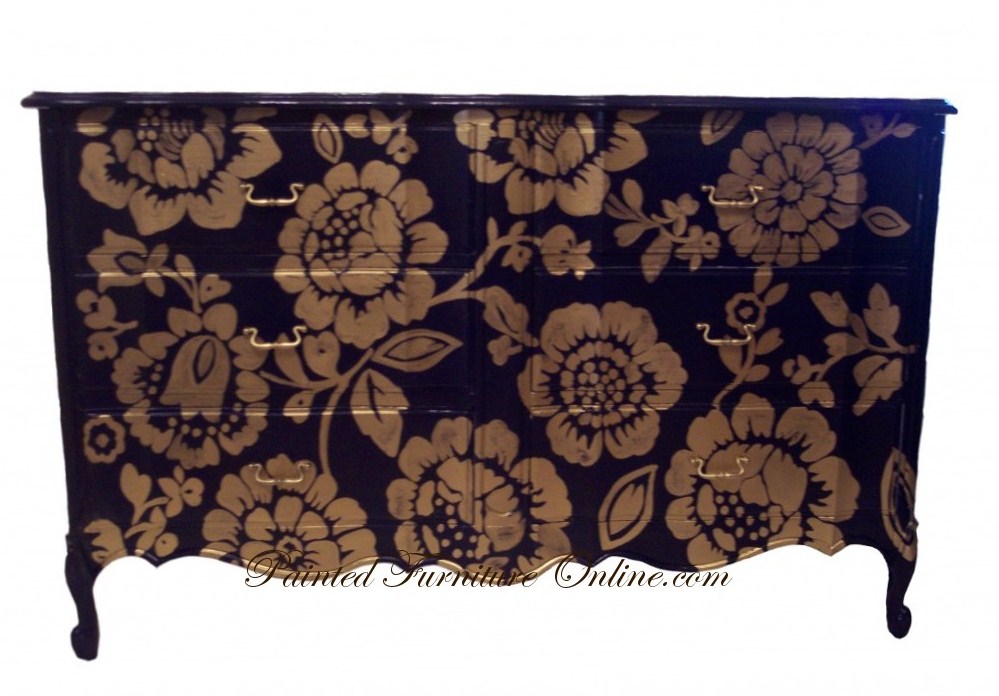
Repainting furniture in lighter colors such as white, cream and beige are fairly easy to achieve with a few coats of paint, but it is the darker colors such as navy, or red which can be challenging.
In the Nordic countries in the 18th century red pigments were very expensive so it was very uncommon to have a deep red painted chest. Today we have a number of paint colors at our disposal, but many people still have a difficult time getting an even coat with these rich colors.
For my Dixie french provincial chest makeover I used gloss navy paint, and ended up putting close to ten coats on the dresser in order to get an even coat. This again reinforced to me the proper process of painting darker colors.
Although this french provincial chest was one of my first makeovers, I learned a good lesson of investing in good paint that covers well, which in the end saves a lot of time. Ideally if you have a French Provincial dresser with a baked finish, or hard finish, you will not be able to just paint over it with any old paint.
The very first step I suggest is to lightly sand it with fine sanding paper. I recommend buying a good sheet sander which saves a lot of energy. The Black & Decker Sheet Sander
(Norton Sandpaper 80 Grit 20-Sheets per Pack
Over the years I have found sometimes it takes more work to sand but it is worth it in the end. I tend to gravitate towards using an 80 grit sandpaper over my entire piece, and finish with a 120 grit to get rid of any swirl marks before painting. 80 Grit sandpaper is especially nice if there is a previous paint finish, while 120 is good for most finishes to provide the paint something to grip on to without fearing of any swirl marks. I find I can use 80 grit paper over and over, while 120 grit gets worn down quickly.
Ideally you will want to work with a french provincial dresser which is wood to begin with, rather than the white provincial dressers which at one time was sold as children’s sets. The children’s sets were the typical white baked finish rather than the adult french sets which were quality wood stained.
Start with a good flat oil based paint as a primer for those white based french provincial sets. For other top based colors, black can be the go to color for a base, and works with almost every color.
Rustoleum creates a great flat oil paint in black which sticks to almost everything without peeling. I also noticed they have the same thing in brown, which may be even better to replicate the color of wood.
I have used these products even over melamine tops after they have been sanded with no problems of them peeling over the years. I enjoy working with oil as a base because it sticks to almost everything without peeling. It has been the secret to my success with furniture.
After your furniture has dried, your top coat is ready to be applied. If you are planning on applying many more coats such as a glaze over a white finish, then use egg shell paint.

French Provincial Furniture Hardware
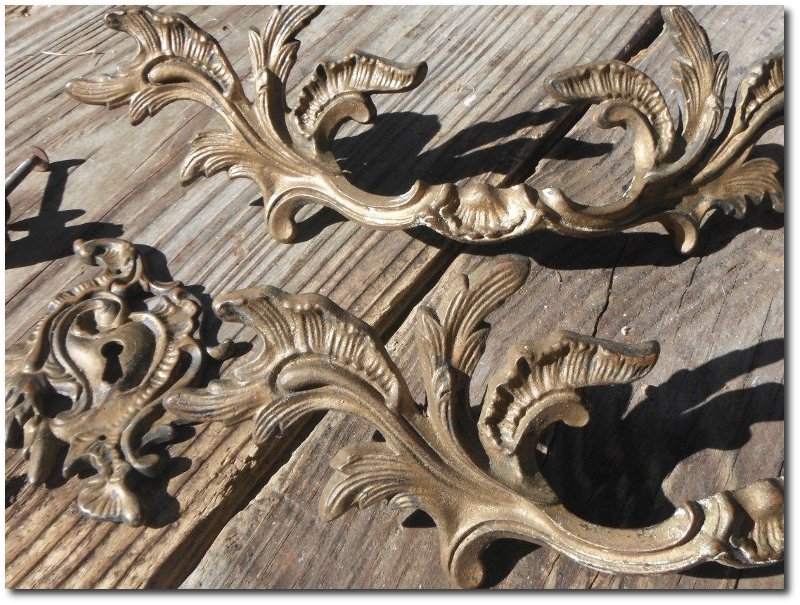
French Provincial Style Brass Drawer Pulls – Ishovelhead On Ebay
While painting vintage french provincial furniture maybe one of the best ways to transform an existing heirloom, changing the hardware can be just as dramatic.
French hardware is still some of the most beautiful hardware on the market, and while most french provincial dressers already come with fancy french hardware, that doesn’t mean you cannot add on additional ornamental details which can push it up a notch.
Antique French Hardware is available through ebay or at specialty hardware stores online. I was fortunate enough to live close to a specialty hardware store in Arlington, Virginia, but they still did not carry any of the antique styles I was after.
Today if you want a vintage Louis french style dresser pull, ebay is still the best place to look other than searching your local salvage antique stores.
The best way to plan out your furniture transformation is to start with the decision of hardware.
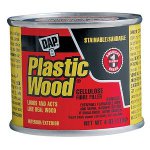 Changing the pulls of your dresser must be done before painting, as it requires sanding down the drawers and filling in the previous hardware holes with wood filler.
I have found that Plastic Wood – Wood Filler has been the best brand I have worked with to fill in chips of wood, or existing drawer holes. The trick to this brand is to close the container as soon as you are finished taking out as much filler you are needing to use. The material over time and exposure to the air will get hardened making it more difficult to fill into the gaps of wood.
Buying the 4 ounce container over the 8 ounce container will almost guarantee you wet wood filler to work with, as you use it sporadically amongst your furniture makeovers. After the wood filler is dry, sanding is imperative. Sand the areas around the wood filler and apply another layer of wood filler, making sure the area is even with the existing wood. After the second coat dries, be sure to sand with a fine sandpaper to even out the overall texture. Don’t forget the inside of the drawer. You want the inside to be just as beautiful as the outside.
Gold plating and buffing brass hardware are options for restoring genuine french antique chests. With most french dressers I improve, I tend to spray the white washed french hardware gold, and finish it in gold leaf which gives it that genuine metallic feel.
Silver leaf is available, and is just as beautiful and works well with off white, beige, and french gray dressers. While spraying hardware may be taboo to many furniture restoration experts, it serves as a quick up-date.
Additional Links:
- Gold Ormolu- The Swedish Furniture
- Brass French Pulls- The Cabinet Hardware Ideas
- 20 Common Painting / Furniture Restoration Questions Answered- Hersite
- Ornamental Furniture Molds From Top Quality Moldings- Meranda’s Picks – Hersite
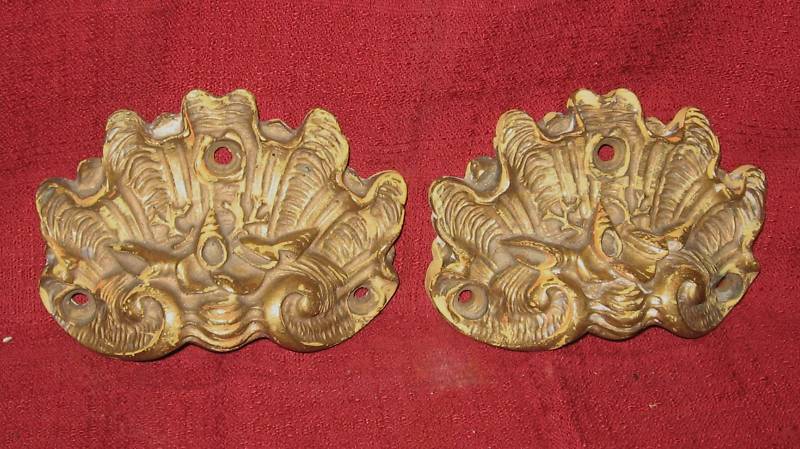
Pr. Antique Nautical Shell Brass Hardware Drawer Pulls From Kyle’s Antiques New Jersey
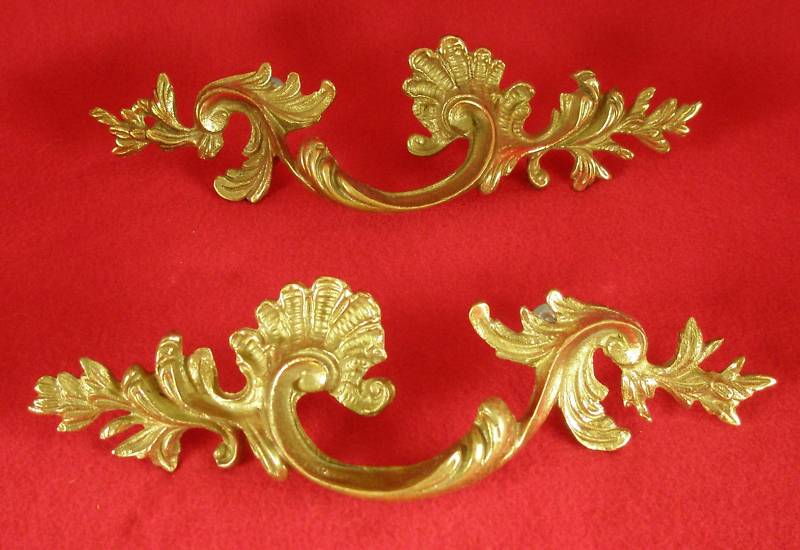
PAIR OF BRONZE FRENCH EMPIRE DRAWER PULLS Ebay Seller Essinc
PAIR OF BRONZE FRENCH EMPIRE DRAWER PULLS Ebay Seller Essinc
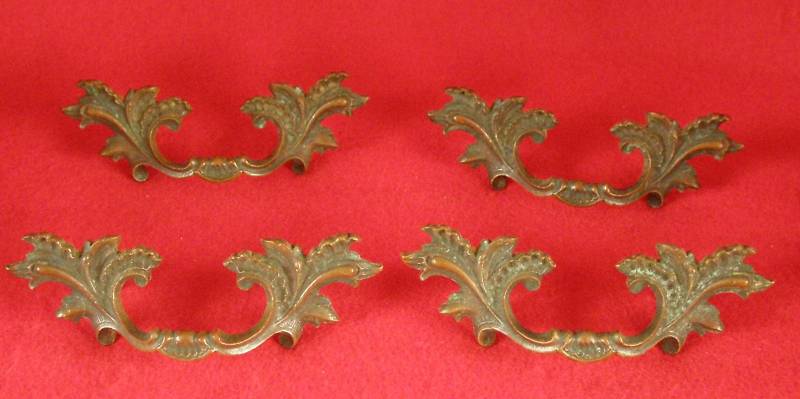
SET OF 4, BRONZE FRENCH DRAWER PULLS Ebay Seller Essinc
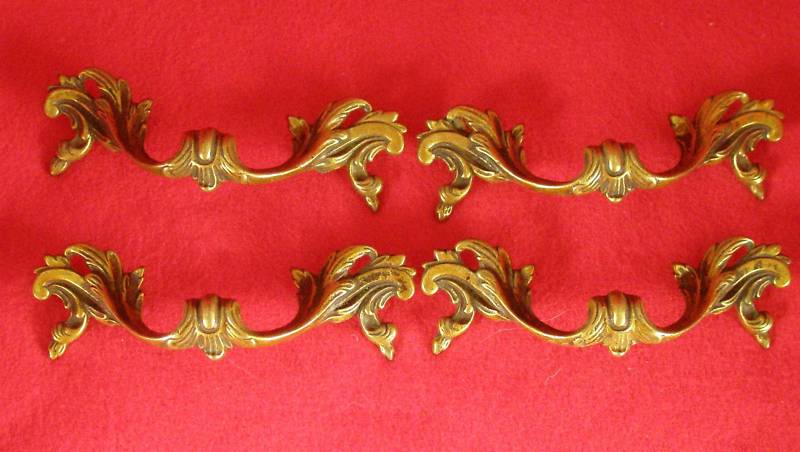
SET OF 4 BRONZE FRENCH DRAWER PULLS C.1920 Ebay Seller Essinc
SET OF 4 BRONZE FRENCH DRAWER PULLS C.1920 Ebay Seller Essinc
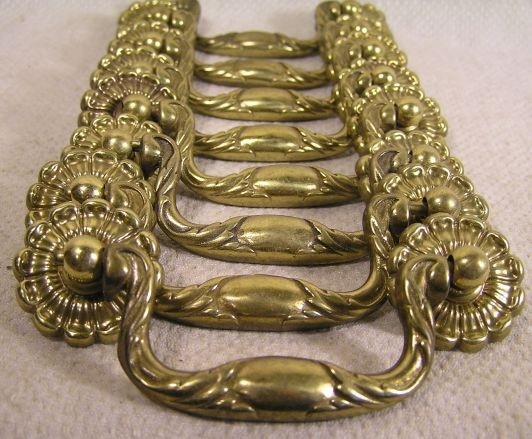
10 Vintage Brass French Handles Pull Furniture Hardware From Twin City Lady
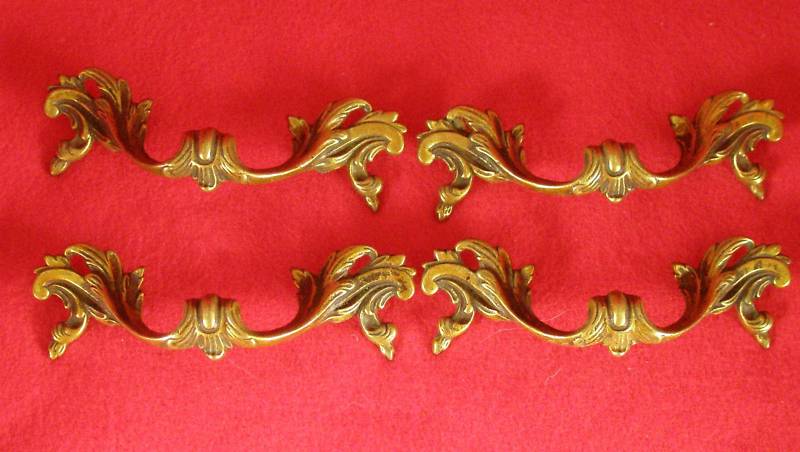
SET OF 4, BRONZE FRENCH DRAWER PULLS
SET OF 4 BRONZE FRENCH DRAWER PULLS C.1920 Ebay Seller Essinc
Refractory French Provincial Leaf Tables
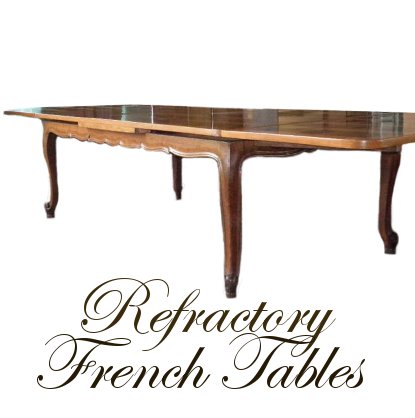 Some of the most rare french provincial tables are the refractory French Provincial leaf tables.
They are quite uncommon and innovative in their design, but hardly new.
Some of the earliest examples of refractory tables date back to 1600. Refractory tables have leaves hidden under the table and when pulled out, rise to the existing table top. In some designs, both leaves meet in the center of the table and can be flipped over which serve as the leaves.
Refractory leaf tables are often seen as an extra thick table top, in comparison to the tables with removable leaves which involve physically pulling the apart the table from each end.
These tables have additional leaves apart from the table and require manually inserting the table leaves into the middle section to extend the table.
Over the years of reselling vintage french provincial tables, I rarely came across a french table which still had the original leaves. Most people over the years have forgotten to donate the leaves, or somehow the leaves were misplaced as they moved from one house to the next. One advantage of a refractory french table is the physical table has the leaves already in place. This beautiful design is rare in a french style, and simply one of the most stunning designs that are available.
How To Faux Crackle French Provincial Furniture
Many people love aged furniture finishes which are often naturally changed from ever changing weather exposure, and distressed from being handled over time.
Finding the just right furniture style with naturally worn paint can be next to impossible. There are a number of faux finishes that can give the look of a naturally aged appearance; one of those being crackle paint. You can take an ordinary piece of furniture and transform it with a few faux painting techniques that could give the beauty of a genuine antique.
The number one mistake most people make when using crackle paint is ONLY using the crackle finish without pairing it with other faux painting technique such as glazing and distressing.
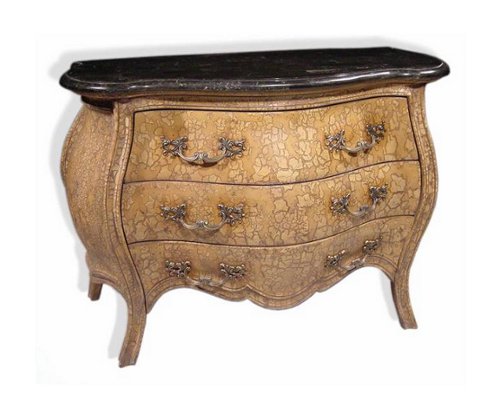
This beautiful bombe crackle finished chest is from Interiors Online. As you can see this mastered finish has glazing around the handles which highlights an aged appearance. Look at the overall base color and crackle color. They are almost identical, which is truly the best way to crackle finish a piece of furniture. Add on top of that glazed oil paint was added to highlight the beauty of the curvature of this fine bombe style.
Another huge mistake is using a modern colored paint such as white, crackling the piece of furniture, and calling it done. Brightly colored white paint is a dead give away that the piece has been newly painted, and is not an old piece.
Crackle should only be combined with antiques, (OR an antique style, either color or shape) if you are going after a genuine look. Crackle paint should always be combined with a off-white, a beige, gray or a color which is a historical paint color, and then dulled by either brown stain (Minwax Polyshade in Antique Walnut), or brown glaze (brown paint mixed with glaze) to give it a slightly used aged look. Do NOT use a metallic glaze. Metallic glaze is another dead give away it is newly finished, and fantasy than antique.
Another mistake is using crackle all over the piece of furniture, (unless you are a professional and are skilled at combining other techniques). I have made this mistake and the finish turns out quite messy and lumpy.
Crackle paint is sometimes very hard to paint over because it can lump together in the process. Going back over the finish messes up the chemical process of crackling that often times less crackle is more in the long run.
Crackling an entire dresser can give a very busy appearance. Try a number of pieces before using crackle over an entire piece. I would highly suggest going over your finish with the same overall color in some areas to make it less busy, and adding a glaze or a brown stain which will highlight the crackle in a subdue way.
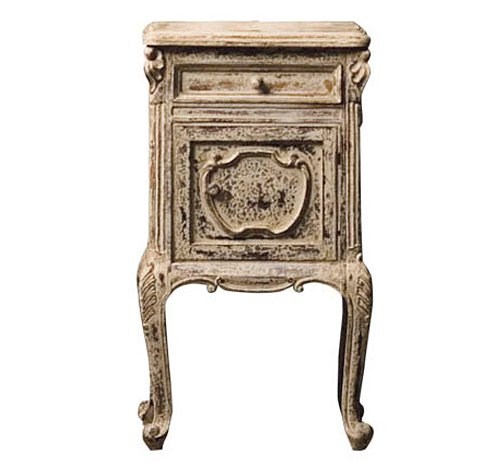
Vagabond Vintage From Mothology.com Featured in Home Beautiful
The beauty of a crackle finish is that it can conceal problem areas. If you’re considering stripping a piece of furniture down to it’s original wood finish, you could consider sanding it quite well, and crackling in the problem areas.
A) Before painting, be sure to sand your french provincial furniture. If you have a natural wood french provincial dresser you may want to sand it well, and not prime it. After the crackle finish has dried you can distress it, and then move on to glazing the entire piece.
B) If you have an already white french provincial dresser, prime it first using an oil based primer, such as Rustoleum’s Black or Brown flat Oil based paint.
Techique 1- Using Regular Glue.
Step 1- Sand your furniture, (prime if necessary) and apply your base coat. (Your (water based) base coat of paint will be the color that shows through your crackle finish)
Step 2- Once your base coat is dry, apply a semi thick layer of Elmers glue. You can dilute the glue to make it easier to work. Let the glue dry almost all the way, then apply your top paint color which is mixed with Elmers glue. The paint ratio to glue should be 2 to 1. 2 cups of paint to 1 cup of glue. Let the paint dry, and within 48 hours you should have a beautiful crackle finish.
Another variation of this finish is to paint a base coat, let it dry, paint on glue, and let it dry until it is tacky, (more than 1 hour, but not more than 2 or 3) and paint on your top coat. If it doesn’t crackle, the glue is too dry.
Several tips I have used:
– Use a brush, not a roller to apply the glue
– Applying the glue thick than thin, which gives a better crackled appearance. Experiment with more glue which is supposed to produce wider cracks.
-When painting the glue, use random brush strokes so the cracks don’t come out in the same direction.
– Try not to work on vertical finishes. Turn your furniture piece over one step at a time and apply the glue and let it dry. This technique can be time consuming, but worth the trouble to get an even finish. Working on vertical surfaces can cause the glue to run together in a gloppy mess.
Technique 2- Porcelain Crackle Glaze
Porcelain crackle glaze is a bit different. Porcelain crackle is supposed to replicate old china which has aged over time. Ideally this finish looks the nicest on vases, lamps and statues which would be made of porcelain.
The first coat is painted, crackle is applied, and dried, and glaze is then rubbed onto the finish revealing the very small cracked details.
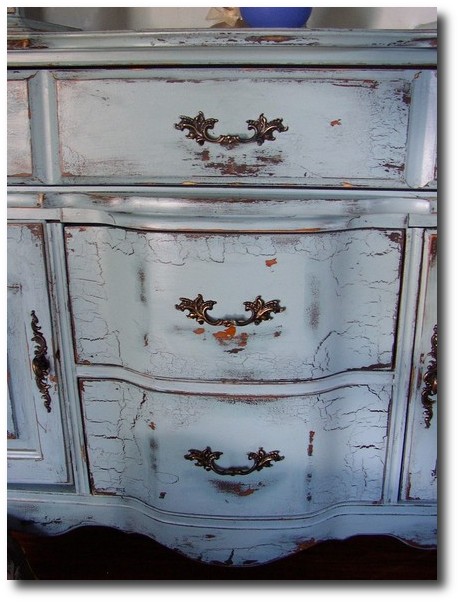
This amazingly charming BASSETT french country buffet available from Artisan8 on esty comes with a detatchable hutch. Hand-crafted distressed look involving a 6-layer paint application for a one-of-a-kind piece. Architecturally detailed and slightly elevated by four french-styled legs.